The Repeal of PASPA
Murphy v. NCAA: The 2018 Supreme Court Landmark Decision that Reshaped American Sports
Oral Argument at the High Court: December 4, 2017
On the morning of December 4, 2017, the Supreme Court of the United States heard oral argument in Murphy v. National Collegiate Athletic Association (Nos. 16-476 and 16-477). The courtroom was packed with state governors, gaming executives, sports league commissioners, and constitutional scholars.
Representing New Jersey, former U.S. Solicitor General Theodore Olson delivered a masterful opening argument, asserting that PASPA was a direct assault on state sovereignty. Olson argued that by forbidding a state legislature from repealing its own state penal laws, Congress had effectively commandeered state government machinery to enforce federal policy.
The justices' questioning immediately signaled deep skepticism toward PASPA. Justice Anthony Kennedy, the perennial swing vote, pressed the federal government's attorney on the fundamental nature of federalism: You are saying the state is not an independent sovereign; it's a minion of the federal government. Chief Justice John Roberts and Justice Neil Gorsuch expressed similar concern, noting that if Congress wanted to ban sports betting, it had to do so directly under federal law rather than ordering states to maintain bans.
The 7-2 Opinion by Justice Alito
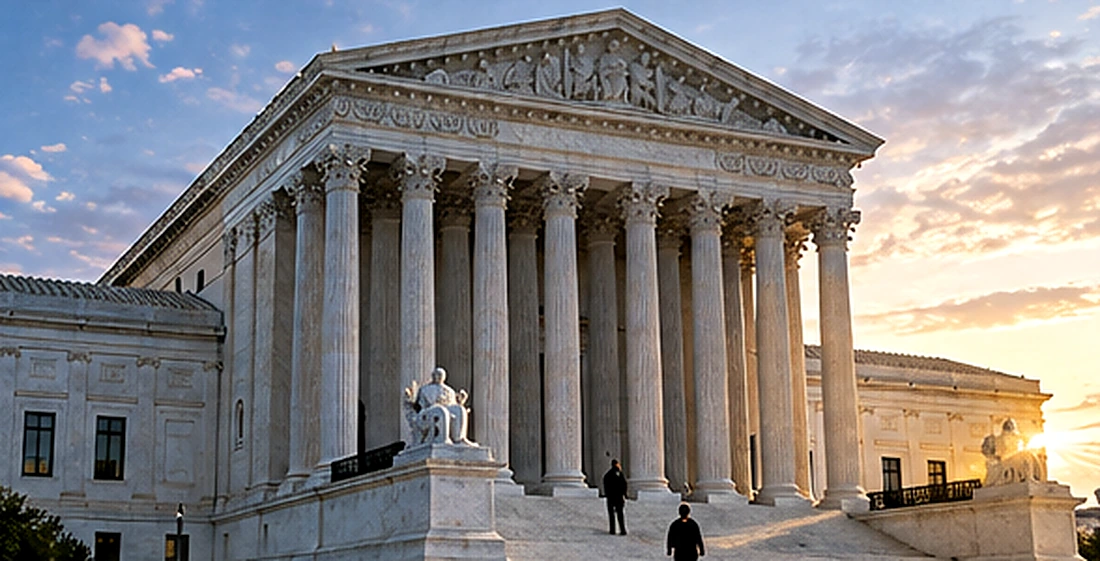
On May 14, 2018, the Supreme Court delivered its historic ruling. Writing for a commanding 7-2 majority, Justice Samuel Alito began the opinion with an unequivocal affirmation of federalism: The legalization of sports gambling requires an important policy choice, but the choice is not ours to make. Congress can regulate sports gambling directly, but if it elects not to do so, each State is free to act on its own. Our job is to decide whether the federal statute before us, PASPA, violates the Constitution. We hold that it does.
Constitutional Landmark: Murphy v. NCAA (584 U.S. 453, 2018)
PASPA's provision prohibiting states from authorizing or repealing sports gambling prohibitions violates the Tenth Amendment's anti-commandeering doctrine. Because the remainder of the statute cannot be severed from the unconstitutional provisions, PASPA is struck down in its entirety.
Restored sovereign authority to all fifty states to regulate and tax commercial sports betting within their borders without federal interference.
Justice Alito anchored the ruling in the foundational anti-commandeering doctrine established in New York v. United States (1992) and Printz v. United States (1997). The Court rejected the argument that prohibiting a state from acting was somehow different from compelling a state to act: It is as if federal officers were installed in state legislative chambers and were armed with the authority to stop legislators from voting on any offending bills. A more direct affront to state sovereignty is not easy to imagine.
Justice Alito outlined three essential reasons why the anti-commandeering doctrine is vital to the American constitutional order:
- 1. Division of Sovereign Power: It protects individual liberty by ensuring that neither the federal government nor the states hold unchecked power.
- 2. Political Accountability: It prevents federal lawmakers from passing popular prohibitions while forcing state officials to bear the blame, administrative costs, and policing burdens of enforcing them.
- 3. Cost Prevention: It prevents Congress from shifting the financial costs of federal policy choices onto state budgets.
Total Invalidation of PASPA
The remaining constitutional battle in the case centered on severability: if PASPA's prohibition on state authorization under Section 3702(1) was unconstitutional, could the remaining provisions-such as Section 3702(2), which prohibited private persons from operating sports gambling schemes pursuant to state law-survive independently?
Justice Alito, joined by six justices, concluded that the statute could not be severed. The Court held that Congress never intended to impose a standalone federal prohibition on private sports betting without the state prohibition mechanism. Enforcing Section 3702(2) against private actors without state involvement would enact a federal regulatory regime that Congress never debated or approved.
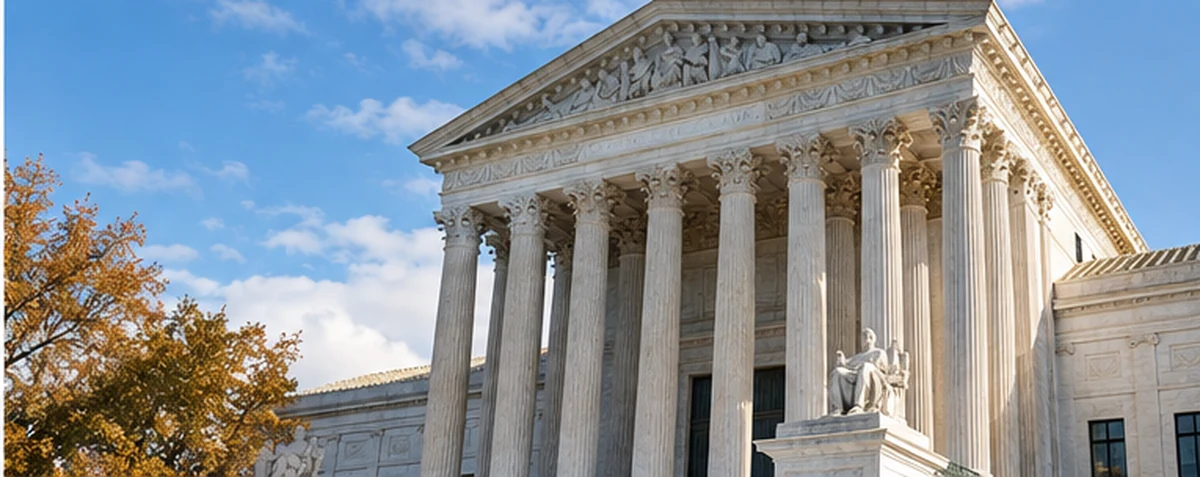
Consequently, the Supreme Court struck down PASPA in its entirety, invalidating 28 U.S.C. Sections 3701-3704 across all fifty states. Only Justices Ruth Bader Ginsburg and Sonia Sotomayor dissented on the severability question, while concurring in part on the anti-commandeering holding.

Immediate Aftermath and Market Shift
The Murphy decision sent shockwaves through American sports, politics, and commerce. Within twenty-four days of the ruling, Delaware accepted the nation's first legal single-game sports bet outside Nevada on June 5, 2018. New Jersey launched its legal sports betting market on June 14, with Governor Phil Murphy placing the state's inaugural wager at Monmouth Park racetrack.
The ruling unlocked an extraordinary commercial gold rush. Major international bookmakers, such as Flutter Entertainment (FanDuel) and Entain (BetMGM), partnered with American casino giants and daily fantasy sports operators (DraftKings) to build state-of-the-art mobile betting platforms.
Professional sports leagues, which had spent millions fighting New Jersey in court, instantly pivoted from opponents to commercial partners. Within months, the NBA, MLB, and NHL signed official data and betting sponsorship agreements with commercial sportsbooks. The Murphy ruling stands as one of the most economically transformative Supreme Court decisions of the twenty-first century.
Alito’s Murphy Opinion and the Anti-Commandeering Doctrine
On May 14, 2018, the Supreme Court of the United States delivered its monumental 7-2 decision in Murphy v. National Collegiate Athletic Association (138 S. Ct. 1461), striking down PASPA as unconstitutional under the Tenth Amendment. Writing for the majority, Justice Samuel Alito reaffirmed the foundational anti-commandeering principle: while Congress holds broad power under the Commerce Clause to regulate private commercial conduct directly, it cannot issue direct commands to the governments or legislatures of the sovereign states.
Justice Alito directly addressed the federal government's contention that PASPA was valid because it merely prohibited states from acting rather than forcing them to pass laws. The Court firmly rejected this semantic distinction, writing: "The anti-commandeering doctrine does not apply only to affirmative mandates. It applies with equal force to negative prohibitions." Alito explained that whether Congress tells a state legislature that it must enact a law or that it may not repeal a law, the constitutional violation is identical: the federal government is seizing control of the state's legislative process.
The majority emphasized that the anti-commandeering doctrine serves three vital constitutional purposes: first, it protects individual liberty by maintaining the structural division of power between the states and the national government; second, it promotes political accountability, ensuring that voters know whether state or federal officials are responsible for a policy; and third, it prevents Congress from shifting the financial costs of enforcing federal policies onto state taxpayers.
Why PASPA Failed the Severability Test
A critical legal debate within the Murphy decision centered on the doctrine of severability. Even after holding that Section 3702's ban on state authorization was unconstitutional, the Court had to determine whether other provisions of PASPA could survive, specifically the companion clause that made it unlawful for private commercial individuals to operate sports betting schemes.
Justice Alito and the Court majority concluded that the provisions were not severable. In a rigorous statutory analysis, the Court observed that Congress intended for PASPA to function as a unified regulatory whole. Congress never would have enacted a standalone federal ban on private sports gambling without the state regulatory prohibitions, because doing so would have created a massive federal regulatory apparatus that Congress explicitly sought to avoid.
Consequently, the Supreme Court held that the entirety of PASPA must fall. The decision had an immediate, transformative effect: overnight, the twenty-six-year federal ban on sports betting was completely dissolved, restoring sovereign police powers to all fifty states and initiating the most rapid legislative expansion of commercial gaming in American history.
The Three Anti-Commandeering Rationales in Murphy v. NCAA
The Three Anti-Commandeering Rationales in Murphy v. NCAA
Justice Alito articulated three constitutional rationales: (1) preserving the division of sovereign authority to protect liberty; (2) ensuring voter accountability so federal officials cannot hide behind state enforcement; and (3) preventing Congress from shifting costs onto state taxpayers.