New Jersey vs. Federal Government
The Decade-Long Constitutional Crusade from Christie I to the Supreme Court Docket
Origins in Atlantic City
The epic legal confrontation between New Jersey and the federal government was born out of severe economic crisis. For thirty years, Atlantic City had enjoyed a regional commercial casino monopoly on the East Coast. However, the rapid expansion of commercial and tribal casinos in neighboring Pennsylvania, New York, Delaware, and Maryland stripped Atlantic City of its geographic dominance. Between 2006 and 2014, Atlantic City casino revenues plummeted from 5.2 billion dollars to under 2.5 billion dollars, leading to the devastating closure of four major casino resorts in 2014 alone.
State leaders, led by visionary state Senator Raymond Lesniak and Governor Chris Christie, recognized that legalizing sports betting at Atlantic City casinos and state racetracks was essential to revitalize the state's tourism and gaming economy.
In November 2011, New Jersey voters overwhelmingly approved a state constitutional amendment authorizing the state legislature to legalize sports betting. In January 2012, the state enacted the Sports Wagering Act, establishing a formal state licensing and regulatory scheme under the New Jersey Division of Gaming Enforcement.
Round One: Christie I (2012-2013)
In August 2012, the NCAA, NFL, MLB, NBA, and NHL filed a federal lawsuit in the U.S. District Court for the District of New Jersey to enjoin the state law under PASPA. The case, initially captioned NCAA v. Christie (Christie I), marked the beginning of a historic legal saga.
The Judicial Contradiction: Christie I (2013) vs. Christie II (2016)
In Christie I, the Third Circuit held that PASPA barred New Jersey's affirmative licensing law, but explicitly suggested the state was free to repeal its own betting prohibitions. When New Jersey enacted a partial repeal in 2014, the en banc Third Circuit in Christie II reversed course, holding that even a partial repeal violated PASPA.
This irreconcilable judicial contradiction forced the Supreme Court to grant certiorari in Murphy v. NCAA, teeing up the decisive Tenth Amendment anti-commandeering ruling.
New Jersey, represented by former U.S. Solicitor General Paul Clement, argued that PASPA violated the Tenth Amendment anti-commandeering doctrine, which holds that Congress cannot compel sovereign state governments to enact or enforce federal regulatory programs.
U.S. District Judge Peter Sheridan ruled in favor of the sports leagues, and in September 2013, a divided three-judge panel of the U.S. Court of Appeals for the Third Circuit affirmed the ruling (730 F.3d 208).
Crucially, however, the Third Circuit's Christie I opinion contained a vital sentence that would alter the course of American gaming history. Writing for the majority, Judge Julio Fuentes observed: We emphasize that what PASPA commands is that states shall not sponsor, operate, advertise, promote, license, or authorize sports gambling schemes... We do not read PASPA to prohibit New Jersey from having repealed its sports wagering ban in whole or in part. The Third Circuit appeared to tell New Jersey: while you cannot license sports betting, you are entirely free to repeal your state criminal prohibitions.
Round Two: Christie II (2014-2016)
Seizing upon Judge Fuentes' language, the New Jersey Legislature crafted a brilliant legislative response. In October 2014, Governor Christie signed Senate Bill 2460 (Christie II). The new statute did not license, tax, or regulate sports betting. Instead, it simply repealed all state statutory and constitutional prohibitions on sports betting at Atlantic City casinos and licensed racetracks for persons age twenty-one and older.
The sports leagues immediately returned to federal court, asserting that New Jersey's partial repeal was a disguised authorization that violated PASPA.
The litigation produced an extraordinary sequence of conflicting appellate rulings:
- First, a three-judge Third Circuit panel ruled 2-1 against New Jersey in August 2015.
- Then, in an unprecedented move, the Third Circuit vacated that decision and agreed to rehear the case en banc before all twelve active judges of the circuit.
- Finally, in August 2016, the full Third Circuit en banc issued a 9-3 decision in NCAA v. Christie (832 F.3d 389), ruling against New Jersey.
Writing for the en banc majority, Judge Marjorie Rendell held that because New Jersey's repeal selectively permitted sports betting only at casinos and racetracks while maintaining criminal penalties elsewhere, it had the practical effect of authorizing sports betting in violation of PASPA. New Jersey had reached the end of the appellate road in the Third Circuit.
Supreme Court Petition: June 2017
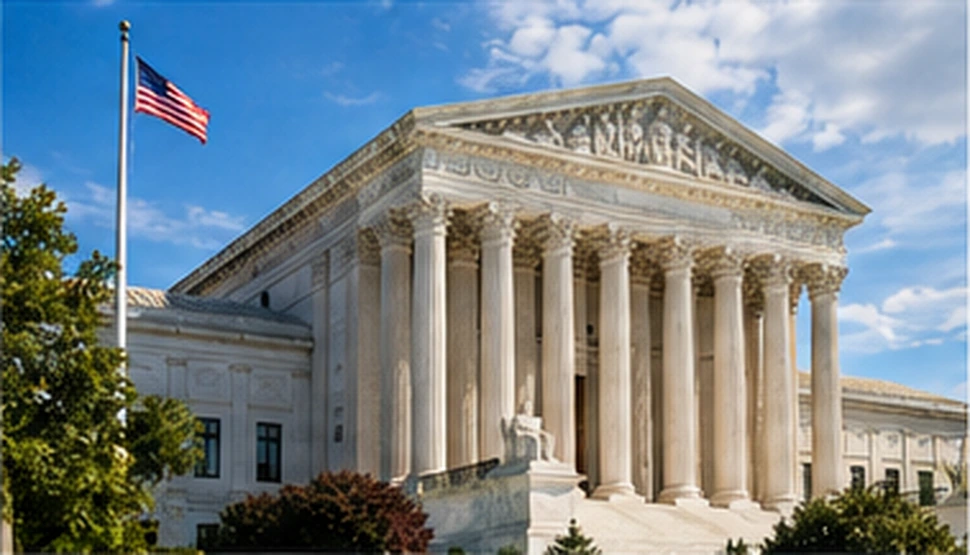
Faced with defeat in the en banc Third Circuit, New Jersey made a bold decision: it petitioned the Supreme Court of the United States for a writ of certiorari. Most legal observers viewed the petition as a long shot, particularly after the Acting U.S. Solicitor General under the Trump administration submitted an amicus brief advising the Supreme Court to deny review, asserting that PASPA was fully constitutional.
However, on June 27, 2017, the Supreme Court defied conventional expectations, granting New Jersey's petition for certiorari in consolidated cases now captioned Murphy v. NCAA (Governor Phil Murphy succeeded Christie during the proceedings).
The Supreme Court agreed to decide the fundamental constitutional question: Does a federal statute that prohibits state authorization or repeal of state-law prohibitions violate the Tenth Amendment anti-commandeering rule? The stage was set for the ultimate showdown on the highest judicial stage in the nation.
| Appellate Stage | Federal Judicial Court | Official Ruling & Split | Controlling Constitutional Rule |
|---|---|---|---|
| Christie I (730 F.3d 208) | Third Circuit 3-Judge Panel | Ruled for Sports Leagues (2-1) (2013) | PASPA constitutional, but states free to repeal bans |
| Christie II (832 F.3d 389) | Third Circuit En Banc Court | Ruled for Sports Leagues (9-3) (2016) | Selective repeal held to constitute de facto authorization |
| Certiorari Petition | Supreme Court of the United States | Cert Granted (June 27, 2017) | Agreed to review anti-commandeering federalism questions |
| Murphy v. NCAA (138 S. Ct. 1461) | Supreme Court of the United States | Ruled for New Jersey (7-2) (2018) | Struck down PASPA; Congress cannot commandeer states |
Christie I and II: Six Years of Third Circuit Litigation
New Jersey's historic challenge to PASPA spanned six years of relentless federal appellate litigation that captivated the American legal community. Facing severe economic distress in Atlantic City following the collapse of casino revenues, New Jersey voters in November 2011 overwhelmingly approved a state constitutional amendment authorizing the state legislature to legalize sports betting at casino resorts and racetracks. In 2012, Governor Chris Christie signed enabling legislation, prompting the NCAA, NFL, NBA, MLB, and NHL to immediately sue the state in federal district court.
In the first major appellate clash-National Collegiate Athletic Ass'n v. Christie (Christie I), 730 F.3d 208 (3d Cir. 2013)-a three-judge panel of the U.S. Court of Appeals for the Third Circuit ruled against New Jersey, holding that PASPA did not violate the Tenth Amendment anti-commandeering doctrine. However, the Third Circuit included a crucial caveat: the court stated that PASPA did not prevent New Jersey from simply repealing its existing state prohibitions against sports betting.
Taking the Third Circuit at its word, the New Jersey legislature passed a 2014 statute that repealed all state statutory prohibitions against sports betting at casinos and racetracks. The sports leagues sued again, leading to Christie II (832 F.3d 389, 3d Cir. 2016 en banc). In a sharply divided 9-3 en banc ruling, the Third Circuit reversed itself, holding that selectively repealing state prohibitions constituted de facto "authorization" under PASPA. Under the majority's logic, New Jersey was trapped in a permanent statutory straightjacket: once a state had enacted a sports betting ban, federal law prohibited the state legislature from ever modifying or repealing it.
Paul Clement and Ted Olson's Supreme Court Certiorari Petition Strategy
Faced with the Third Circuit's untenable paradox, New Jersey's legal leadership made a bold strategic move, retaining two of the most distinguished appellate advocates in American history: former United States Solicitors General Theodore B. Olson and Paul D. Clement. Olson and Clement recognized that the Third Circuit's en banc ruling provided the ideal factual vehicle to challenge PASPA directly in the Supreme Court on core constitutional federalism grounds.
In their petition for a writ of certiorari, New Jersey's legal team framed the case not as a dispute about sports betting, but as an existential threat to American constitutional federalism. Clement and Olson argued that if Congress can prohibit a state legislature from repealing its own state criminal statutes, the federal government can effectively commandeer the sovereign legislative apparatus of the states. They emphasized that under the Tenth Amendment and the Printz precedent, Congress cannot reduce sovereign state legislatures into puppet administrative arms of the federal government.
Despite the Acting U.S. Solicitor General filing a brief urging the High Court to deny review, the Supreme Court granted certiorari in June 2017. During oral arguments in December 2017, the Justices signaled deep skepticism of the federal government's arguments, laying the intellectual groundwork for the historic opinion that dismantled PASPA.
The Critical Distinction Between Christie I and Christie II
The Critical Distinction Between Christie I and Christie II
In Christie I (2013), New Jersey attempted to license and regulate sports betting, which the Third Circuit held violated PASPA. In Christie II (2014), New Jersey repealed its state criminal bans at casinos and racetracks, relying on Third Circuit dicta, leading to the en banc showdown.