Federal vs. State Gambling Laws
Jurisdictional Boundaries, Police Powers, and the Dynamics of American Dual Sovereignty
Dual Sovereignty in Gaming Policy
The regulation of gambling in the United States is governed by the principles of American federalism and dual sovereignty. Under the United States Constitution, the federal government is a government of enumerated powers. Those powers not delegated to the federal government by the Constitution, nor prohibited by it to the states, are reserved to the states respectively, or to the people, under the Tenth Amendment.
| Jurisdictional Tier | Constitutional Authority | Core Regulatory Responsibility | Controlling Supreme Court Precedent |
|---|---|---|---|
| Federal Government | Commerce Clause (Art. I, § 8) | International borders, interstate banking, money laundering | Champion v. Ames, 188 U.S. 321 (1903) |
| Sovereign States | Tenth Amendment Police Powers | Commercial licensing, taxation rates, operational authorization | Phalen v. Virginia, 49 U.S. 163 (1850) |
| Sovereign Tribal Nations | Indian Commerce Clause (Art. I, § 8) | Governmental reservation gaming, Class III compact negotiations | California v. Cabazon Band, 480 U.S. 202 (1987) |
| Municipal Governments | Delegated State Powers | Local zoning ordinances, land-use permits, host community pacts | Municipal Home Rule Enactments |
Historically, the authority to regulate, tax, or completely prohibit commercial gambling has resided firmly within the sovereign police powers of the individual states. The police power encompasses the broad inherent authority of state legislatures to enact laws protecting the public health, safety, morals, and general welfare of their citizens.
Consequently, there is no single uniform American gambling law. Instead, the United States features a complex legal patchwork consisting of fifty distinct state legal frameworks, three hundred sovereign tribal gaming jurisdictions, and an overarching layer of federal statutes that police interstate commerce.
Federal Scope Under Commerce Clause
Federal authority to regulate commercial gambling is derived almost exclusively from the Interstate and Foreign Commerce Clause of Article I, Section 8, Clause 3, alongside the Indian Commerce Clause and the Postal Clause.
The federal government does not license commercial casinos, set minimum payout percentages for slot machines, or collect state gambling excise taxes. Instead, federal statutory intervention has historically been confined to three specific objectives:
- 1. Preventing organized crime and syndicated racketeering enterprises from exploiting interstate telecommunications and transit conduits (e.g., the Wire Act, Travel Act, and Illegal Gambling Business Act).
- 2. Protecting the domestic banking and financial system from illicit money laundering and deceptive payment routing (e.g., the Bank Secrecy Act and UIGEA).
- 3. Establishing statutory baselines for tribal government gaming and balancing tribal sovereignty against state interests (e.g., the Indian Gaming Regulatory Act).
Where gambling occurs strictly within the borders of a single state and involves no federal trust lands or interstate transmission facilities, federal regulatory power is constitutionally restrained.

Anti-Commandeering Doctrine Limits
The boundary between federal supremacy and state police power was tested in the Supreme Court's historic 2018 ruling in Murphy v. NCAA. The case centered on the Professional and Amateur Sports Protection Act of 1992 (PASPA), in which Congress prohibited state governments from licensing or authorizing sports betting.
The Supreme Court resoundingly invalidated PASPA under the anti-commandeering doctrine, reaffirming that while Congress can regulate private commercial activity in interstate commerce directly under valid federal statutes, it cannot issue orders commanding sovereign state legislatures to enact, maintain, or refrain from repealing state laws.
Writing for the Court, Justice Samuel Alito emphasized that the anti-commandeering doctrine serves three vital constitutional purposes: (1) it protects individual liberty by dividing sovereign power; (2) it ensures political accountability by clarifying which level of government is responsible for a policy; and (3) it prevents Congress from shifting the regulatory and financial costs of federal policies onto state taxpayers.
The Modern Patchwork Across 50 States
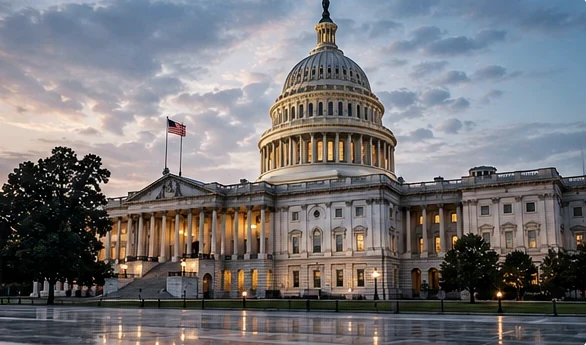
Following the invalidation of PASPA and the judicial limitation of the Wire Act to sports betting, state legislatures have exercised their police powers with remarkable diversity.
The Anti-Commandeering Jurisprudential Architecture
Under the Tenth Amendment, Congress possesses the power to regulate interstate commerce directly, but it cannot compel state legislatures to enact or maintain federal regulatory schemes.
Established an ironclad constitutional boundary: New York v. United States (1992) barred legislative conscription; Printz v. United States (1997) barred executive conscription; and Murphy v. NCAA (2018) barred federal negative commands barring state repeals.
At one end of the regulatory spectrum are states like Nevada, New Jersey, Pennsylvania, and Michigan, which have embraced comprehensive commercial gambling ecosystems, authorizing land-based commercial casinos, retail and mobile sportsbooks, state-regulated online casinos, and digital poker rooms generating billions in state tax revenues.
At the opposite end are states like Utah and Hawaii, whose state constitutions contain strict, absolute prohibitions against all forms of commercial gambling, including state lotteries. In between lie states with hybrid regimes, permitting tribal casinos or state lotteries while fiercely resisting commercial sports betting or digital casino apps.
This vibrant divergence illustrates the enduring strength of American federalism. State citizens, acting through their elected representatives or direct ballot referendums, determine the moral, social, and economic policies governing gambling within their borders, while the federal government stands as an interstate arbiter ensuring that no single jurisdiction's policies unlawfully spill over into neighboring states.
Commerce Clause vs. State Police Powers in Gaming
The constitutional boundary dividing federal and state gambling authority represents one of the most sophisticated battlegrounds in American administrative law. Under the Tenth Amendment, powers not delegated to the federal government by the Constitution are reserved to the states respectively. For over a century, Supreme Court precedents dating back to Phalen v. Virginia (1850) and Stone v. Mississippi (1880) have recognized that regulating or prohibiting commercial gambling falls squarely within the traditional police powers of the states, which authorize state legislatures to enact laws safeguarding public health, safety, and community welfare.
However, state regulatory police powers are constantly circumscribed by the Dormant Commerce Clause, which prevents individual states from enacting protectionist legislation that discriminates against out-of-state economic actors or places an undue burden on interstate commerce. In federal gaming litigation, courts apply strict scrutiny to state statutes that require commercial operators to maintain corporate headquarters, data servers, or physical facilities exclusively within the state without a compelling, non-discriminatory regulatory justification. If a state imposes higher tax rates or regulatory burdens on out-of-state entities, federal courts will strike down the enactment as an unconstitutional trade barrier.
This delicate constitutional balance requires continuous judicial reconciliation. While a state holds the sovereign right under the Tenth Amendment to prohibit commercial gaming entirely within its territorial boundaries-as Utah and Hawaii have chosen to do-it cannot utilize that authority to interfere with lawful commercial gaming occurring in neighboring states, nor can it prevent out-of-state software vendors from competing fairly under uniform state licensing standards.
Preemption Canons and Cooperative Dual Sovereignty Across State Borders
When state gaming laws intersect with federal statutes, federal courts apply well-established canons of statutory preemption. Under the Supremacy Clause (Article VI, Clause 2), federal law displaces conflicting state statutes under three distinct doctrines: express preemption, field preemption, and conflict preemption. In the gaming sector, however, federal courts apply a strong presumption against preemption, recognizing that Congress historically intended for federal gaming statutes to assist, rather than displace, state regulatory frameworks.
In landmark decisions reviewing the Wire Act, IGBA, and UIGEA, federal appellate courts have observed that federal legislation functions as an interstate policing backstop. Rather than creating a comprehensive federal regulatory agency to govern commercial gaming, Congress designed federal statutes to incorporate state substantive law directly, criminalizing conduct only when it violates the penal statutes of the jurisdiction where it occurs. This structure of cooperative federalism ensures that state legislatures retain ultimate democratic control over social policy while the federal government deploys its interstate investigative tools to combat organized cross-border evasion.
The sole major statutory exception to this presumption against preemption was PASPA, which unconstitutionally prohibited states from modifying their own penal codes. Following the Supreme Court's invalidation of PASPA in Murphy v. NCAA, the legal architecture of American gambling law firmly restored dual sovereignty as its controlling principle: individual states govern the legality of games within their borders, the federal government regulates international borders and banking channels, and tribes exercise sovereign self-governance under federal trust protections.
Federalism Matrix: Police Powers vs Commerce Clause
Federalism Matrix: Police Powers vs Commerce Clause
State Governments hold police powers to license, tax, prohibit, or regulate casinos and sportsbooks intra-state. The Federal Government regulates interstate wire communications, anti-money laundering compliance, and federal Indian trust obligations.