Professional and Amateur Sports Protection Act
28 U.S.C. § 3701: The Rise, Enforcement, and Constitutional Demise of the Federal Sports Wagering Ban
Statutory Design of PASPA
The Professional and Amateur Sports Protection Act of 1992 (PASPA), codified at 28 U.S.C. Sections 3701-3704, was a unique federal statute in American legal history. Unlike traditional criminal statutes such as the Wire Act, PASPA did not make placing or accepting a sports wager a federal crime. Instead, PASPA was designed as a direct statutory prohibition aimed at state governments, restricting them from utilizing their own sovereign legislative powers to permit sports betting.
The operative core of the statute was codified at 28 U.S.C. Section 3702, which made it unlawful for:
(1) A governmental entity to sponsor, operate, advertise, promote, license, or authorize by law or compact; or
(2) A person to sponsor, operate, advertise, or promote, pursuant to the law or compact of a governmental entity,
a lottery, sweepstakes, or other betting, gambling, or wagering scheme based, directly or indirectly, on one or more competitive games in which amateur or professional athletes participate.
The statutory definition of competitive games in Section 3701 encompassed virtually all athletic events, including professional team sports, high school and collegiate competitions, and Olympic events, but explicitly excluded parimutuel horse and dog racing, which remained governed by state laws and the Interstate Horseracing Act of 1978.
Private Enforcement Under § 3703
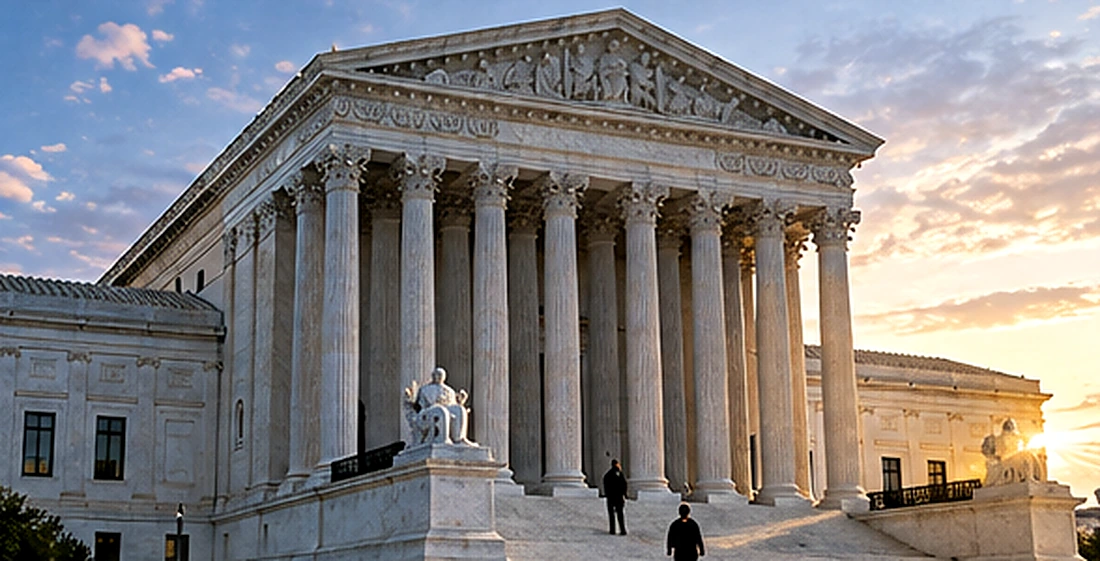
A defining characteristic of PASPA was its enforcement mechanism codified at 28 U.S.C. Section 3703. While the statute authorized the Attorney General of the United States to bring civil actions to enjoin violations, it also granted extraordinary civil standing to private sports organizations.
Under Section 3703, any professional sports organization or amateur sports organization whose competitive game is alleged to be the basis of a wagering scheme possessed statutory standing to file a civil injunction lawsuit in federal district court to prevent a state from licensing or authorizing sports betting.
This private standing provision proved crucial. Throughout the decade-long legal battle with New Jersey, the federal Department of Justice frequently played a secondary or amicus role, while the primary plaintiffs actively litigating the cases and funding the legal offensive were the National Collegiate Athletic Association (NCAA), the National Football League (NFL), Major League Baseball (MLB), the National Basketball Association (NBA), and the National Hockey League (NHL). This public-private enforcement structure allowed commercial athletic leagues to enforce federal statutory commands against sovereign state legislatures.
28 U.S.C. § 3704: Statutory Grandfather Allocations & Exceptions
When Congress enacted PASPA in 1992, it granted an explicit statutory monopoly to Nevada while grandfathering limited parlay lotteries in three states. New Jersey was granted a 524-day statutory grace period to authorize sports betting in Atlantic City, but the legislature failed to act before the deadline, freezing the nationwide prohibition.
Statutory Exemptions and the New Jersey Dilemma
To pass the 102nd Congress, PASPA included controversial statutory grandfathering provisions under 28 U.S.C. Section 3704. Congress recognized that completely outlawing existing state sports gaming would prompt immediate unconstitutional takings claims and political opposition from Western lawmakers.
Section 3704 carved out four specific categories of exemptions:
- First, states where sports betting was conducted between 1976 and 1990 were grandfathered, granting Nevada full immunity to continue offering single-game sports wagers.
- Second, states that conducted parimutuel sports pools or lottery games during that period-specifically Oregon, Delaware, and Montana-were permitted to maintain those exact limited formats.
- Third, Congress created a special one-year statutory window under Section 3704(a)(3) specifically for New Jersey, allowing any state operating commercial casino resorts for ten consecutive years to authorize sports betting within one year of PASPA's enactment.
Tragically for New Jersey, political disagreements between Atlantic City casino owners and racetrack operators paralyzed the state legislature, and the deadline expired on January 1, 1994, without the state enacting qualifying legislation. For the next twenty years, New Jersey was barred from offering the exact same sports betting products that generated hundreds of millions of dollars in tax revenue for Nevada.
Constitutional Demise in Murphy v. NCAA
New Jersey's challenge to PASPA began in earnest after state voters passed a 2011 constitutional referendum. The state initially attempted to license sports betting at casinos and racetracks (Christie I), but the Third Circuit ruled that licensing violated PASPA. New Jersey then adopted a novel legislative strategy: it enacted a 2014 law that completely repealed its state prohibitions on sports betting at casinos and tracks (Christie II), arguing that repealing a law did not constitute licensing or authorizing a scheme.
| Supreme Court Justice | Appointing President | Constitutional Disposition | Primary Legal Rationale |
|---|---|---|---|
| Samuel Alito (Author) | George W. Bush | Unconstitutional (7-2) | Violates Tenth Amendment anti-commandeering doctrine |
| John Roberts (Chief) | George W. Bush | Unconstitutional (7-2) | Preserves structural federalism and political accountability |
| Anthony Kennedy | Ronald Reagan | Unconstitutional (7-2) | Congress cannot reduce state legislatures into federal officers |
| Stephen Breyer | Bill Clinton | Partial Severability (6-3) | Agreed state authorization ban invalid; sought private ban survival |
| Ruth Bader Ginsburg | Bill Clinton | Dissenting (7-2) | Maintained PASPA operated as valid direct federal regulation |
When the Third Circuit en banc held that even repealing a ban violated PASPA because it selectively channeled gambling, New Jersey petitioned the Supreme Court. The Court granted certiorari to decide whether PASPA violated the Tenth Amendment anti-commandeering doctrine established in New York v. United States (1992) and Printz v. United States (1997).
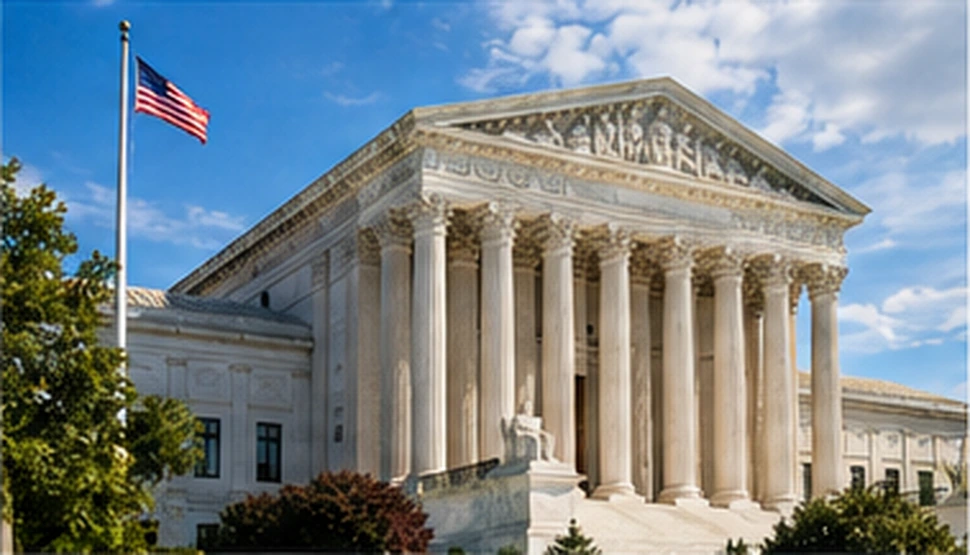
On May 14, 2018, the Supreme Court struck down PASPA in Murphy v. NCAA (138 S. Ct. 1461). Writing for the 7-2 majority, Justice Samuel Alito held that Section 3702's prohibition on state authorization directly commanded state legislatures: The anti-commandeering doctrine may sound like a arcane legal concept, but it simply means that Congress cannot issue direct orders to state legislatures.
The Court further held that PASPA's private actor prohibition could not be severed from the unconstitutional state command, invalidating the statute entirely. The decision fundamentally affirmed federalism principles, freeing every state in the union to independently regulate sports betting.
PASPA Grandfather Exemptions and Nevada’s Monopoly
When Congress enacted the Professional and Amateur Sports Protection Act of 1992 (PASPA), codified at 28 U.S.C. Sections 3701–3704, it established an unprecedented statutory freeze that entrenched geographic commercial favoritism. Under Section 3702, the law made it unlawful for any state government or state agency to sponsor, operate, advertise, promote, license, or authorize any sports betting scheme. However, to secure the requisite congressional votes for passage, legislative sponsors inserted Section 3704, which carved out explicit grandfather exemptions for states that had authorized sports wagering within specific statutory time windows.
The most controversial provision of Section 3704 was subsection (a)(1), which permanently exempted states where sports betting was conducted lawfully between 1976 and 1990. In practice, this statutory carve-out granted the State of Nevada an absolute, federally protected monopoly over full commercial sports pool wagering, while granting limited exemptions to Oregon, Delaware, and Montana for parimutuel sports lotteries. Furthermore, subsection (a)(3) provided a narrow one-year window for states with established commercial casino gaming to authorize sports betting; however, the New Jersey legislature failed to enact the necessary enabling legislation before the statutory deadline expired in late 1993.
For twenty-five years, this statutory inequality sparked intense constitutional criticism from state lawmakers and legal scholars. Opponents argued that PASPA violated the fundamental doctrine of equal sovereignty among the states, a constitutional principle rooted in the Tenth Amendment and the Northwest Ordinance. By freezing state legislative codes as they existed in 1992, Congress effectively converted Nevada into a sovereign enclave while permanently disenfranchising forty-six other sovereign state legislatures from addressing their own domestic economic priorities.
Murphy’s 7–2 Anti-Commandeering Ruling
The constitutional reckoning for PASPA arrived on May 14, 2018, when the Supreme Court of the United States issued its landmark 7-2 decision in Murphy v. National Collegiate Athletic Association (138 S. Ct. 1461). Writing for the Court, Justice Samuel Alito grounded the invalidation of PASPA in the anti-commandeering doctrine, a cornerstone of American federalism established in New York v. United States (1992) and Printz v. United States (1997). The Court held that while the federal government holds enumerated authority to regulate private commercial conduct directly, Congress cannot issue direct orders to state legislatures compelling them to enact or enforce federal regulatory policies.
Justice Alito dismantled the federal government's argument that PASPA merely prohibited state action rather than commanding affirmative legislative enactments. The Court explained that the distinction between an affirmative command and a negative prohibition is an empty semantic illusion: whether Congress tells a state legislature what it must do or what it cannot do, the federal government is unconstitutionally seizing control of the state's legislative apparatus. By dictating what state penal laws could or could not be repealed, PASPA stripped state citizens of political accountability, blurring the constitutional lines that allow voters to know whether state or federal officials are responsible for governing policies.
The Anti-Commandeering Doctrine in Murphy v. NCAA
The Anti-Commandeering Doctrine in Murphy v. NCAA
Justice Alito explained that whether Congress orders a state to enact a law or prohibits a state from repealing a law, the constitutional violation is identical: Congress is commandeering state legislative apparatuses in violation of the Tenth Amendment.