Casinos and Presidential Campaigns
From Atlantic City Boardwalk Politics to the Battle for the Silver State
Atlantic City as Political Arena
Before Nevada became a critical early primary state, Atlantic City, New Jersey, served as the primary geographic stage where commercial casino executives intersected with national politics. Following the 1976 referendum authorizing casino gaming, the Atlantic City boardwalk was transformed into a multi-billion-dollar resort corridor, home to properties operated by Caesars, Bally's, Resorts International, and Donald Trump.
During the 1980s and 1990s, Atlantic City casino ballrooms hosted high-dollar political fundraisers, boxing championships attended by political luminaries, and candidate appearances. Donald Trump utilized his high-profile casino openings-most notably the April 1990 unveiling of the Trump Taj Mahal, billed as the eighth wonder of the world-to court prominent national politicians, including New Jersey governors Thomas Kean and Jim Florio, alongside federal lawmakers.
However, Atlantic City also became synonymous with political risk. When Trump Entertainment Resorts faced multiple corporate chapter 11 bankruptcies in 1991, 2004, 2009, and 2014, leaving bondholders with steep losses and thousands of casino workers facing layoffs, the Boardwalk became a recurring political weapon. In the 2016 presidential election, Democratic nominee Hillary Clinton traveled to the shuttered Trump Plaza to deliver a major address, using the rusting casino towers as a backdrop to criticize Trump's business acumen and treatment of working-class laborers.
Regulatory Investigation: Atlantic City Casino Licensure Proceedings
Before Donald Trump entered national politics, his Atlantic City casino empire underwent forensic financial and ethical scrutiny by New Jersey state regulators. The proceedings established strict compliance firewalls separating corporate casino revenues from local political party committees.
"Casino licensees must maintain absolute financial integrity and disassociate corporate assets from political coercion to preserve public trust in state regulation."
Nevada as Early Presidential Primary
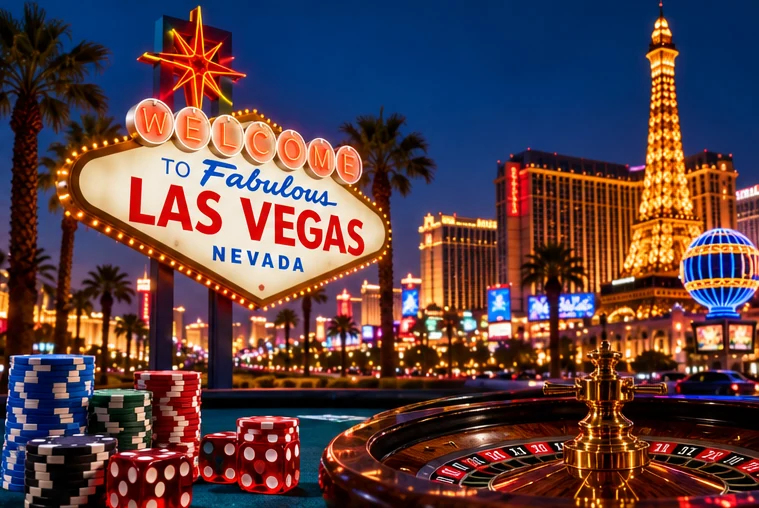
The political relationship between casinos and presidential campaigns was revolutionized in 2008 through the leadership of Senate Majority Leader Harry Reid of Nevada. Reid, a former chairman of the Nevada Gaming Commission who possessed unmatched political influence in Washington, successfully lobbied the Democratic National Committee to elevate Nevada into the prestigious early primary window, placing the Silver State third on the national nominating calendar immediately following Iowa and New Hampshire.
Reid's strategic maneuver forced every serious presidential contender in the nation to establish a deep, permanent political operation in Nevada. No longer could national candidates treat commercial gaming as an embarrassing Western anomaly. Candidates were required to spend weeks campaigning in Clark County, visiting casino back-of-house operations, touring employee dining rooms, and addressing casino industry conventions.
The focal point of Nevada presidential politics became the Culinary Workers Union (Local 226), which represents sixty thousand hospitality workers employed at Las Vegas and Reno casino resorts. The Culinary Union's endorsement became the most coveted prize in Democratic presidential politics. In the 2008, 2016, and 2020 primaries, candidates like Barack Obama, Hillary Clinton, Bernie Sanders, and Joe Biden held raucous campaign rallies in casino employee cafeterias, pledging to protect union healthcare plans and defend gaming jobs.

Casino Ballrooms in National Politics
As commercial gaming shed its historic stigma, casino resort convention complexes became premier venues for national political civic infrastructure. Major presidential debates, national party conventions, and political conferences are routinely staged in Las Vegas resort event centers.
In October 2015, the Wynn Las Vegas hosted the first Democratic presidential primary debate between Hillary Clinton and Bernie Sanders. In October 2016, the Thomas & Mack Center in Las Vegas hosted the final, fiery presidential debate between Donald Trump and Hillary Clinton. Major conservative gatherings, including the Republican Jewish Coalition annual leadership conference, are held annually at the Venetian Resort, where candidates audition before mega-donors like Miriam Adelson.
This institutional integration reflects the broader normalization of the gaming industry in American life. Today, a presidential campaign stopping in Las Vegas without engaging casino executives and union workers is politically unthinkable.
| Presidential Candidate | Campaign / Super PAC Conduit | Leading Gaming Donor Network | Primary Policy Priority |
|---|---|---|---|
| George W. Bush (2004) | Bush-Cheney '04 / RNC Victory | Steve Wynn & Nevada Resort Leaders | Preservation of PASPA & corporate tax depreciation |
| Barack Obama (2012) | Priorities USA Action / DNC | Jim Murren (MGM) & Las Vegas Leaders | Convention travel normalization & 2011 Wire Act review |
| Donald Trump (2016–2020) | Preserve America PAC | Sheldon & Miriam Adelson ($170M+) | Land-based resort protection & 2018 Wire Act revision |
| Joe Biden (2020) | Biden Victory Fund / DNC | Bipartisan Tribal Gaming Coalitions | Tribal sovereignty enforcement & DOI compact modernizations |
Electoral Battles for Casino Workers
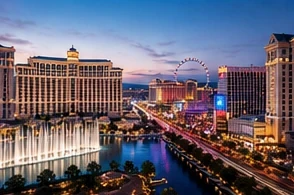
In modern presidential elections, Nevada stands as one of the quintessential swing states in the Electoral College, decided by razor-thin margins in 2016, 2020, and 2024. Consequently, the economic well-being of the casino workforce has become a central battleground in national economic debates.
During the COVID-19 pandemic, when Las Vegas casinos were shuttered by executive order, leaving unemployment in Clark County soaring above thirty percent, presidential candidates clashed fiercely over federal relief packages, the Paycheck Protection Program, and economic recovery aid for the hospitality sector.
In the 2024 presidential campaign, both Donald Trump and Kamala Harris unveiled major economic proposals specifically tailored to casino resort workers, most prominently the proposal to eliminate federal income taxes on tips earned by service workers. This competition underscores how casino workers-once ignored by national candidates-now occupy a pivotal position in shaping the economic policy agendas of American presidential contenders.
The Nevada Caucus and Culinary Workers Union Local 226 Endorsement Power
In modern presidential politics, the path to the White House runs directly through the resort casinos of the Las Vegas Strip. When the Democratic National Committee restructured its presidential primary calendar in 2008 to elevate Nevada to the position of early western caucus state, it placed the sixty-thousand-member Culinary Workers Union Local 226 at the epicenter of national politics.
Representing guest room attendants, cocktail servers, cooks, and food service workers across major Las Vegas casino resorts, Culinary Local 226 operates one of the most formidable political mobilization machines in the United States. During competitive presidential primaries, candidates from across the country travel to Las Vegas casino basements and employee dining rooms to pitch their platforms directly to union members, seeking the union's coveted endorsement.
The political power of Local 226 was dramatically demonstrated in the 2008, 2016, and 2020 Democratic primaries. The union's precinct captains organized precinct-level caucuses inside Strip casino resorts-allowing shift workers to vote directly on the casino floor during work hours-and deployed hundreds of full-time campaign organizers who knocked on hundreds of thousands of doors across Clark County, establishing Nevada as a decisive electoral bellwether in presidential politics.
Presidential Fundraising in Las Vegas and Atlantic City
Beyond voter mobilization, the commercial casino industry has long served as an indispensable financial reservoir for presidential campaign fundraising. From the mid-twentieth century through the modern era, presidential contenders of both major parties have routinely scheduled high-dollar fundraising galas in the luxury suites and private ballrooms of Las Vegas and Atlantic City resort properties.
During the 1980s and 1990s, political figures including Ronald Reagan, George H.W. Bush, and Bill Clinton cultivated close relationships with prominent casino executives, including Steve Wynn, Kirk Kerkorian, and Donald Trump. These fundraisers brought together high-net-worth real estate developers, hospitality executives, and Wall Street investment bankers, generating millions of dollars in primary campaign funds within hours.
In the modern post-Citizens United era, these fundraising relationships have shifted from individual candidate events to multi-million-dollar Super PAC retreats. Leading presidential candidates hold exclusive, closed-door briefings with gaming moguls during the annual Global Gaming Expo (G2E) in Las Vegas, securing financial commitments that underwrite national media campaigns and digital voter turnout operations across the country.
The Influence of Harry Reid & Culinary Local 226
The Influence of Harry Reid & Culinary Local 226
Harry Reid elevated Nevada into the early primary window in 2008. Since then, the 60,000-member Culinary Workers Union Local 226 has served as the key kingmaker in Nevada Democratic presidential primaries, forcing every candidate to court casino floor labor.