George W. Bush and UIGEA
Financial Disruption, the SAFE Port Act Midnight Maneuver, and the Reshaping of Online Gaming in 2006
Context and the Global Poker Boom
During the first term of the George W. Bush administration, internet gambling underwent an explosive cultural and financial expansion. The catalyst was the 2003 World Series of Poker main event victory by Chris Moneymaker, an amateur accountant who secured his tournament entry through an eighty-six-dollar online satellite tournament on PokerStars. The resulting phenomenon, dubbed the Poker Boom, transformed online poker from an obscure digital hobby into a mainstream television and cultural sensation.
Statutory Landmark: UIGEA of 2006
Signed into law by President George W. Bush, UIGEA bypassed the unresolved substantive debate over internet gambling legality by targeting the financial clearinghouse conduits. The statute prohibited gambling businesses from accepting credit cards, electronic fund transfers, checks, or wire remittances in connection with unlawful internet wagers.
By 2005, millions of American citizens were actively participating in online poker rooms and internet casinos. Major offshore gaming companies, including PartyGaming (the parent company of PartyPoker), Sportingbet, and 888 Holdings, went public on the London Stock Exchange, achieving valuations exceeding billions of dollars. British and European financial institutions embraced the sector as legitimate e-commerce, while American venture capital and advertising dollars flowed freely into offshore platforms.
The Department of Justice under Attorneys General John Ashcroft and Alberto Gonzales maintained that all forms of internet gambling violated federal law, issuing threatening letters to domestic television networks and magazines that broadcast advertisements for offshore sites. However, federal prosecutors faced immense jurisdictional difficulties pursuing operators licensed in the United Kingdom, Gibraltar, or the Isle of Man. The Bush administration determined that traditional criminal indictments alone could not stem the capital outflow.
White House Alignment and Champions
The political impetus to restrict online gambling aligned perfectly with President Bush's core political coalition, which relied heavily on social conservative organizations and family-values advocacy groups. In Congress, the anti-online gambling movement was championed by two powerful Republican leaders: Representative Jim Leach of Iowa, a senior member of the House Financial Services Committee, and Senate Majority Leader Bill Frist of Tennessee, who harbored ambitions for the 2008 presidential nomination.
Representative Leach pioneered a fundamentally new legislative strategy. Recognizing that direct prohibitions on internet communications repeatedly stalled over First Amendment and ISP liability concerns, Leach proposed targeting the commercial payment plumbing. His bill, the Unlawful Internet Gambling Enforcement Act, did not seek to redefine what constituted illegal gambling under state or federal law. Instead, it sought to mandate that American banks, credit card processors, and money transmitters identify and block financial transactions tied to unlawful internet bets.
The Department of the Treasury and the Federal Reserve initially expressed significant skepticism regarding Leach's proposal. Federal banking regulators cautioned that burdening financial institutions with policing individual consumer debit card swipes and wire transfers was technologically unfeasible and would increase regulatory compliance costs across the entire payments industry.
The SAFE Port Midnight Maneuver
Despite passing the House of Representatives by a wide margin in July 2006, Leach's legislation remained stalled in the Senate as the 109th Congress approached its final adjournment before the pivotal 2006 midterm elections. Commercial gaming interests, civil libertarians, and banking lobbyists appeared to have successfully blocked the measure from reaching the Senate floor.
| Public Operator / Entity | Exchange Listing | Market Capitalization Loss | Pre-UIGEA U.S. Revenue Exposure |
|---|---|---|---|
| PartyGaming PLC (PartyPoker) | London Stock Exchange (LSE) | -58.3% ($2.9 billion lost) | 78% of total gross gaming revenue from U.S. players |
| 888 Holdings PLC | London Stock Exchange (LSE) | -48.2% ($460 million lost) | 52% of total corporate gaming handle from U.S. players |
| Sportingbet PLC | London Stock Exchange (LSE) | -64.1% ($720 million lost) | Sold U.S. facing assets for nominal $1 consideration |
| Neteller Payment Services | London Stock Exchange (AIM) | -61.5% ($680 million lost) | Processed 85%+ of offshore U.S. digital merchant funds |
Then, on the night of September 29, 2006, Senate Majority Leader Bill Frist executed a masterclass in legislative maneuvering. Hours before Congress adjourned, Frist attached the entire text of UIGEA as Title VIII of the Security and Accountability For Every (SAFE) Port Act of 2006 (H.R. 4954). The SAFE Port Act was an unassailable post-9/11 national security measure designed to protect American maritime shipping and container terminals.
Virtually no members of the conference committee had an opportunity to read the final 130-page conference report before the vote. Opponents could not vote against the bill without appearing soft on national security and port safety. Both chambers swiftly approved the conference report in the early morning hours of September 30. On October 13, 2006, President George W. Bush officially signed the SAFE Port Act into law as Public Law 109-347, codifying UIGEA at 31 U.S.C. Sections 5361-5367.

Global Impact and Black Friday
The enactment of UIGEA immediately ruptured the international internet gaming market. Publicly traded companies in the United Kingdom, including PartyGaming and 888 Holdings, announced their immediate withdrawal from the United States market to protect their corporate executives and public exchange listings. Billions of dollars in market capitalization vanished overnight on the London Stock Exchange.
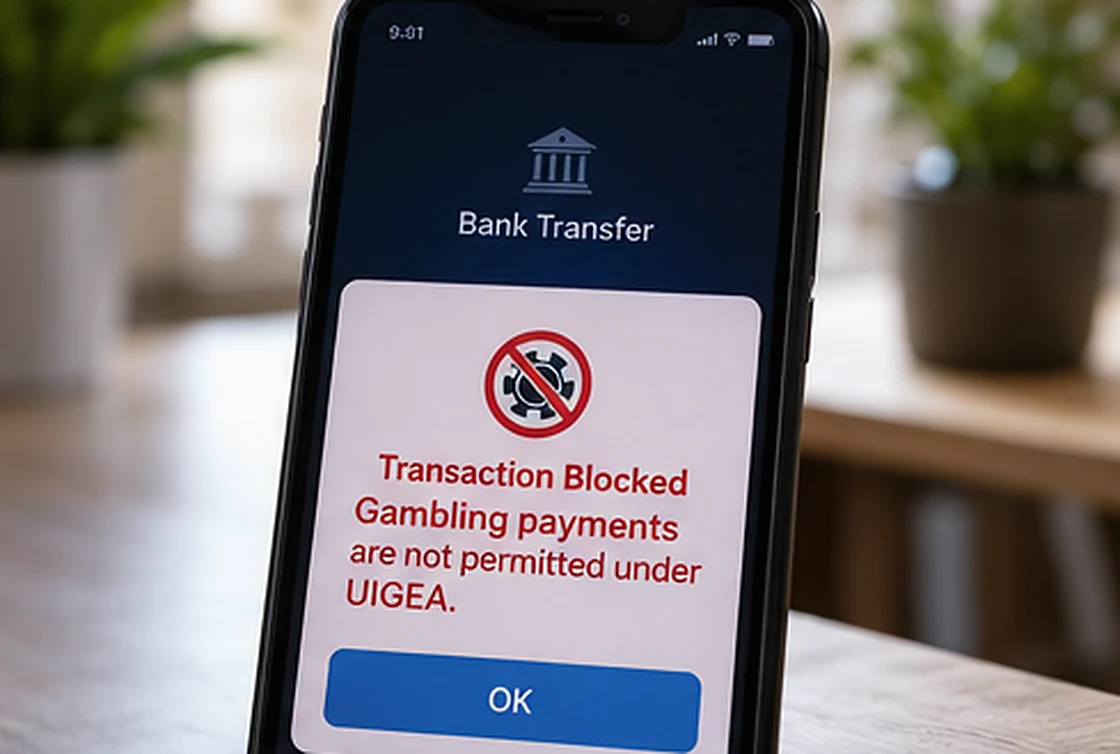
However, privately held offshore operators, most notably PokerStars, Full Tilt Poker, and the Cereus network (Absolute Poker and Ultimate Bet), made the fateful decision to remain in the United States, stepping in to absorb the massive vacuum left by departing publicly traded competitors. Because American banks began declining credit card transactions coded for gambling (Merchant Category Code 7995), remaining offshore operators engaged in increasingly deceptive payment processing schemes, creating fraudulent e-commerce storefronts and misclassifying transactions to deceive domestic financial institutions.
This escalating financial deception directly triggered the federal criminal crackdown that culminated on April 15, 2011, known in poker history as Black Friday. Furthermore, UIGEA's explicit statutory exemption for fantasy sports under Section 5362(1)(E)(ix) inadvertently gave birth a decade later to the multibillion-dollar daily fantasy sports industry dominated by DraftKings and FanDuel, which eventually paved the way for modern state-regulated sports betting.
Frisby and Leach’s SAFE Port Act Coalition
During the presidency of George W. Bush, the political momentum against offshore internet gambling achieved its statutory zenith. Backed by Christian conservative advocacy groups, Representative Jim Leach of Iowa and Senate Majority Leader Bill Frist of Tennessee formed a powerful legislative coalition determined to halt the rapid domestic growth of offshore poker and casino websites that were draining billions of dollars from the American economy without state licensing or federal taxation.
Recognizing that traditional statutory bans faced insurmountable procedural roadblocks from technology companies and horseracing lobbies, Leach devised an innovative regulatory strategy: instead of attempting to criminalize individual online gamblers or block internet website addresses, the federal government should choke off the commercial payment processing architecture that enabled offshore sites to accept deposits from American bank accounts.
When the standalone Unlawful Internet Gambling Enforcement Act repeatedly failed to reach the Senate floor for an open debate, Senator Frist executed a dramatic procedural maneuver in the final hours before the 2006 congressional midterm elections. At 2:00 AM on September 30, 2006, Frist attached the complete 20-page text of UIGEA as Title VIII to the conference report of the SAFE Port Act, an urgent port security measure. Lawmakers voted to pass the conference report without debate, and President Bush signed the legislation into law on October 13, 2006 (Public Law 109-347).
Treasury and Federal Reserve Regulation GG Rules
Following the enactment of UIGEA, the statutory implementation defaulted to the Department of the Treasury and the Board of Governors of the Federal Reserve System, which were tasked under Section 5364 with drafting comprehensive federal banking regulations to operationalize the statute. The commercial banking industry, led by the American Bankers Association, mounted intense resistance, arguing that requiring commercial banks to police millions of daily electronic transactions was administratively impossible and would impose billions in compliance costs.
In response, federal regulators spent more than two years refining the administrative rules, ultimately issuing joint Regulation GG (12 C.F.R. Part 233) in November 2008, during the final weeks of the Bush administration. The regulation established clear compliance safe harbors: rather than requiring manual transaction auditing, banks were required to establish reasonably designed due-diligence policies to screen commercial customers and maintain automated filters targeting Merchant Category Code (MCC) 7995.
Regulation GG established a compliance deadline of December 1, 2009 (subsequently extended to June 1, 2010), establishing the robust banking perimeter that drove major publicly traded gaming firms out of the United States. However, aggressive privately held offshore operators chose to remain, utilizing fraudulent merchant account coding to disguise poker deposits, directly provoking the federal criminal indictments that culminated in the historic "Black Friday" enforcement actions of 2011.
SAFE Port Act Attachment & Title 31 Provisions
SAFE Port Act Attachment & Title 31 Provisions
Codified at 31 U.S.C. §§ 5361-5367, UIGEA prohibited financial transaction providers from knowingly processing funds related to unlawful internet gambling. It did not define what was unlawful, relying on existing state and federal criminal laws, but created explicit carve-outs for season-long fantasy sports, intra-state lotteries, and tribal gaming.