
Political History of Online Poker
From Planet Poker and the Moneymaker Boom to Congressional Backroom Maneuvers
Planet Poker and Early Cardrooms
On January 1, 1998, a software engineer named Randy Blumer made history by launching Planet Poker, the world's first real-money internet poker cardroom. Unlike online casinos-where a player wagers against the house using programmed software algorithms-online poker was fundamentally peer-to-peer: real human players competed against other human players across the country, with the platform collecting a small percentage rake from each pot for hosting the game.
| Legislative Initiative | Lead Congressional Sponsor | Congressional Committee Action | Grassroots PPA Mobilization |
|---|---|---|---|
| H.R. 2046 (IGREA) | Rep. Barney Frank (D-MA) | House Financial Services Committee hearings | 250,000 constituent letters delivered to Congress |
| H.R. 2267 (IGRECPA) | Rep. Barney Frank (D-MA) | Passed House Financial Services 41-22 (2010) | 1,000+ poker advocates attended Washington Fly-In |
| Reid-Kyl Compromise Draft | Sen. Harry Reid (D-NV) | Negotiated Senate omnibus amendment (2012) | Intense land-based casino vs. digital operator talks |
| Nevada AB 414 & SB 9 | Nevada Legislature | Enacted first intrastate online poker law (2013) | Commercial launch of WSOP.com and Ultimate Poker |
Initially played for modest $3/$6 stakes over dial-up internet connections, Planet Poker proved that digital cardrooms could successfully deal cards, manage pot mathematics, and prevent collusion. Soon, rival platforms entered the market with superior server architecture and visual graphics, most notably Paradise Poker in 1999, followed by PokerStars and UltimateBet in 2001, and PartyPoker in 2002.
From its inception, online poker occupied a unique legal status. Advocates argued that poker was fundamentally distinct from games of pure chance like slot machines or roulette. Because skilled players consistently outperformed amateurs through game theory, probability, and psychological reading, poker advocates maintained that it was a game of predominant skill that fell outside traditional common law and statutory definitions of gambling.

2003 Moneymaker Boom and Growth
The political and cultural trajectory of online poker was altered forever in May 2003 at Binion's Horseshoe in downtown Las Vegas. Chris Moneymaker, an unknown twenty-seven-year-old accountant from Tennessee, won the World Series of Poker (WSOP) Main Event, capturing the 2.5 million dollar first-place prize. Moneymaker had won his entry into the ten-thousand-dollar buy-in tournament by winning an eighty-six-dollar online satellite tournament on PokerStars.
The televised coverage of Moneymaker's Cinderella run by ESPN, complete with newly invented hole-card cameras that allowed viewers at home to see every player's hidden cards, ignited an international cultural phenomenon known as the Poker Boom.
Over the next three years, online poker expanded at an unprecedented rate. Millions of American college students, professionals, and retirees opened digital poker accounts. PartyPoker, operated by parent company PartyGaming, became a global juggernaut, generating hundreds of millions of dollars in net profits. In June 2005, PartyGaming completed an initial public offering on the London Stock Exchange, achieving a market capitalization exceeding eight billion dollars-making it larger than British Airways.
The Moneymaker Boom: Online Poker Economic & Political Footprint
All-time peak field fueled by online satellites, surging from 839 entrants in 2003
Estimated global gross online poker operator revenues prior to SDNY enforcement
Peak grassroots membership lobbying Congress to classify poker as a game of skill

Poker Players Alliance & Barney Frank
As social conservative lawmakers in Congress escalated efforts to ban internet wagering in the mid-2000s, the online poker community mobilized to defend its pastime. In 2005, advocates formed the Poker Players Alliance (PPA), a grassroots non-profit advocacy organization. Led by former Republican Senator Al D'Amato and executive director Michael Waxman, the PPA eventually enrolled more than one million dues-paying members.
The PPA retained influential Washington lobbyists and recruited prominent congressional champions, most notably Representative Barney Frank of Massachusetts, the brilliant and combative chairman of the House Financial Services Committee.
Chairman Frank argued that the federal government had no business dictating how consenting adult citizens spent their leisure time and disposable income inside their own homes. Frank introduced the Internet Gambling Regulation and Enforcement Act, which proposed establishing a formal federal licensing and regulatory framework under the Department of the Treasury to tax and regulate online poker and casino gaming, generating an estimated fifty billion dollars in federal revenues. Frank repeatedly held congressional hearings where mathematicians, legal scholars, and grandmaster chess champions testified that poker was an intellectual sport of skill.
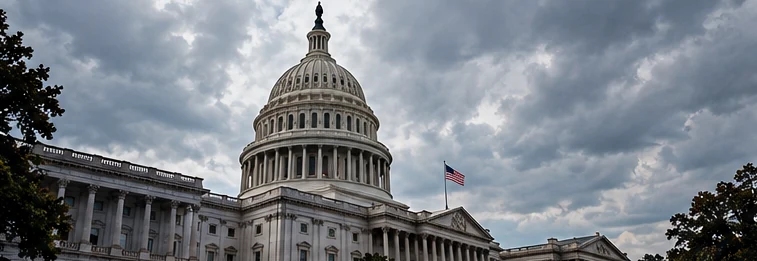
The Cataclysm of 2006 and the Path Forward
Despite Chairman Frank's eloquent defenses and the PPA's million-member grassroots army, online poker suffered a devastating political defeat in September 2006 when Senate Majority Leader Bill Frist attached UIGEA to the SAFE Port Act in a midnight backroom maneuver.
While UIGEA devastated publicly traded operators who immediately exited the market, privately held giants like PokerStars and Full Tilt Poker remained, setting the stage for the dramatic legal confrontation of Black Friday in 2011.
Yet the political campaign waged by the PPA and Barney Frank achieved a crucial long-term victory: it successfully separated the public perception of online poker from illicit street gambling. This intellectual groundwork paved the way for individual states-beginning with Nevada, Delaware, and New Jersey in 2013, followed by Pennsylvania, Michigan, and West Virginia-to pass laws explicitly legalizing, regulating, and taxing online poker under state gaming commissions.
The Poker Players Alliance (PPA) Congressional Grassroots Lobbying Effort
The political history of online poker in the United States is inseparable from the advocacy campaign waged by the Poker Players Alliance (PPA). Founded in 2005 and backed by prominent poker champions and over one million grassroots members, the PPA operated as one of the most sophisticated single-issue consumer advocacy organizations in modern Washington politics.
Following the passage of UIGEA in 2006, the PPA mounted a sustained lobbying campaign to carve out poker from federal gambling prohibitions. Led by former Republican Senator Al D'Amato as chairman, the alliance argued that poker is a game of skill fundamentally distinct from pure games of chance like roulette or slot machines. The PPA organized nationwide "fly-ins" bringing thousands of poker enthusiasts to Capitol Hill to lobby members of Congress, securing bipartisan champions like Representative Barney Frank and Representative Ron Paul.
Frank introduced the Internet Gambling Regulation, Consumer Protection, and Enforcement Act (H.R. 2267), which proposed a federal licensing and taxation framework for online poker. While the bill successfully passed the House Financial Services Committee in 2010 with bipartisan support, it was ultimately blocked from a full House floor vote by conservative leadership, demonstrating the formidable political barriers facing digital gaming legalization at the federal level.
The PPA's grassroots mobilization strategy fundamentally changed how members of Congress viewed digital gaming constituents. By generating hundreds of thousands of individualized constituent letters, holding interactive educational demonstrations for congressional staff, and organizing player advocacy rallies, the organization transformed poker players from an unorganized demographic into an active, politically engaged voting bloc capable of influencing legislative markups.
Skill vs. Chance Legal Defense in Federal Jurisprudence and State Courts
The intellectual centerpiece of the online poker movement was the legal and mathematical argument that poker constitutes a game of skill rather than gambling under state and federal penal codes. In state and federal courtrooms, poker advocates retained leading academic statisticians, economists, and game theorists to present empirical evidence demonstrating that skilled players consistently defeat novice players over statistically significant sample sizes.
The high-water mark of this legal defense occurred in August 2012 in United States v. DiCristina (886 F. Supp. 2d 164), when Senior U.S. District Judge Jack B. Weinstein of the Eastern District of New York dismissed an indictment against an underground Texas Hold'em operator. In a meticulous 120-page opinion reviewing mathematical game theory, Judge Weinstein concluded that poker is predominantly a game of skill and therefore does not constitute "gambling" under the federal Illegal Gambling Business Act (18 U.S.C. § 1955).
However, Judge Weinstein's landmark decision was reversed in August 2013 by the U.S. Court of Appeals for the Second Circuit (726 F.3d 92). The Second Circuit held that Congress intended for Section 1955 to incorporate state law definitions broadly, noting that New York state statutes define gambling to encompass any contest where chance plays an operative role. Despite the Second Circuit's reversal, the skill-game litigation fundamentally reshaped public perception, establishing the evidentiary foundation that state lawmakers later relied upon to legalize state-regulated online poker.
State courts and legislative bodies increasingly adopted the evidentiary insights developed during federal skill litigation. In Pennsylvania, Nevada, New Jersey, and Michigan, state lawmakers explicitly recognized the predominantly skill-based nature of peer-to-peer poker when drafting state legalization statutes. By establishing distinct licensing tracks, separate tax classifications, and consumer fund segregation mandates, states created a modern, secure framework that protected domestic players while generating valuable state revenues.
The "Game of Skill" Legal Argument in Federal Courts
The "Game of Skill" Legal Argument in Federal Courts
In landmark cases like United States v. DiCristina (E.D.N.Y. 2012), federal courts examined whether poker is a game of predominant skill. While Judge Jack Weinstein initially ruled poker was skill-based under IGBA, appellate courts maintained that federal statutes encompass poker if prohibited by underlying state penal laws.